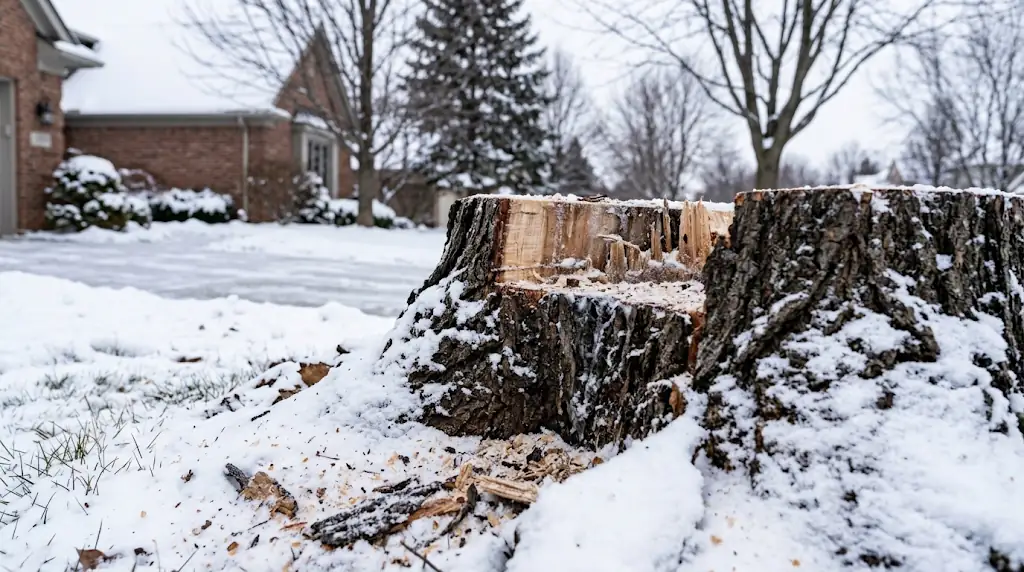
Yes, winter is often the best and most cost-effective time for tree removal in Troy and Rochester Hills. Frozen ground protects residential lawns from heavy equipment damage, bare deciduous canopies improve line-of-sight and reduce wind resistance during rigging, and dormant-season rates can be 10% to 20% lower than peak summer pricing.
Completing heavy tree work between December and March also eliminates the biological transmission risks of common Michigan tree diseases like Oak Wilt.
Winter vs. Warm-Season Tree Removal Comparison
Removing a tree in Southeast Michigan involves completely different property dynamics depending on the season:
| Factor | Winter (December – March) | Spring/Summer (April – August) | Fall (September – November) |
| Lawn & Turf Impact | Minimal: Frozen topsoil prevents ruts from skid steers and trucks. | High: Soft, damp soil leads to turf compaction and deep ruts. | Moderate: Autumn rains can soften soil before the freeze. |
| Pricing & Crew Availability | Lowest: Off-peak scheduling and flexible crew routing. | Highest: Peak seasonal demand drives up wait times and costs. | Moderate: High demand for pre-winter cleanup and hazard prep. |
| Foliage & Rigging Weight | Lightest: Deciduous trees have dropped all leaves; less wind sail. | Heaviest: Full leaf canopies add tons of green weight and drag. | Moderate: Dropping leaves still add disposal bulk. |
| Disease Vector Transmission | Zero: Pathogen-carrying beetles and fungal spores are dormant. | Critical Risk: Oak Wilt beetle activity peaks (April 15 – July 15). | Low Risk: Beetle vectors decrease as temperatures cool. |
| Surrounding Landscape Protection | Optimal: Perennials and shrubs are dormant underground. | Vulnerable: Active garden beds and soft turf easily damaged. | Vulnerable: Plants preparing for dormancy can be broken. |
1. Frozen Ground Eliminates Turf and Soil Compaction
A standard commercial bucket truck or mini skid steer weighs between 3,500 and 15,000 pounds. In the spring and early summer, Oakland County’s clay-heavy soils stay saturated from snowmelt and rain. Driving heavy machinery over soft turf compresses soil pores, suffocates the root systems of neighboring specimen trees, and leaves deep ruts that require expensive lawn repair.
Between late December and early March, sustained freezing temperatures harden the topsoil across Troy and Rochester Hills. Heavy machinery rides on top of the frozen surface without breaking through the turf layer, especially when paired with specialized composite ground-protection mats.
2. Deciduous Canopies: Better Visibility and Safer Rigging
When trees shed their leaves in late autumn, tree removal becomes structurally simpler and faster:
- Clear Structural Visibility: Arborists have an unobstructed view of the internal branch architecture. Hidden defects—such as included bark, fungal fruiting bodies, internal trunk cavities, and hairline structural cracks—are immediately visible from the ground.
- Lower Green Weight: A mature 70-foot Red Oak or Sugar Maple carries thousands of pounds of foliage during July. In the winter, the absence of leaves reduces total tree weight by 15% to 30%, speeding up roping, crane picks, and wood-chipping operations.
- Reduced Wind Sail Effect: Leafless branches allow winter winds to pass through the crown freely. Lower wind resistance makes sectional rigging safer when cranes lift large canopy sections over roofs in tight subdivisions.
3. Strict Compliance with Michigan Oak Wilt Rules
Timing is non-negotiable when removing or pruning oak trees in Southeast Michigan.
The Michigan State University Extension advises that oak trees should never be wounded, pruned, or cut down between April 15 and July 15. During this warm window, nitidulid sap beetles actively transport spores of the lethal vascular fungus Bretziella fagacearum straight to open sap wounds, killing mature red oaks within weeks.
Winter is the safest biological window for oak management:
- Sap beetles are completely inactive during freezing temperatures.
- Fungal spore pads remain dormant and non-viable.
- Removal cuts require zero chemical wound sealants or latex paints, allowing clean dormant cuts to compartmentalize naturally before spring bud break.
4. Off-Peak Contractor Pricing and Fast Scheduling
Tree service demand peaks from May through October due to routine residential landscaping, backyard redesigns, and summer thunderstorm damage. During peak months, tree services often operate with multi-week scheduling backlogs.
Winter marks the industry’s off-peak operational window:
- Lower Overhead Rates: Companies offer flexible, competitive estimates to keep certified crews working through the winter months.
- Rapid Turnaround: Homeowners can often schedule removals within days rather than waiting three to four weeks.
- Emergency Prevention: Taking down a failing green ash or dead pine during a controlled January morning prevents an emergency tree failure during a heavy February ice storm.
Special Considerations: Rochester Hills vs. Troy Terrains
Topography and lot design dictate how winter removals are handled across these two neighboring communities:
- Troy Subdivisions: Suburban residential lots in Troy are relatively flat, but they frequently feature rear-lot utility corridors and enclosed backyard fences. Frozen winter turf allows crews to transport heavy log sections through narrow side yards on wheeled dollies or mini skid steers without chewing up groomed front lawns.
- Rochester Hills Acreages: Properties in Rochester Hills often feature steep slopes, rolling ravines, and sandy-loam hillsides. Wet summer soils can make equipment unstable on hills. Frozen winter ground provides the traction necessary for cranes, spider lifts, and heavy haulers to work steep driveway approaches safely.
When Winter Removal Is NOT Recommended
While dormant removal offers distinct advantages, certain operational conditions require rescheduling:
- Active Blizzards and Sub-Zero Wind Chills: When temperatures fall below 0°F (-18°C), industrial hydraulic equipment fluid thickens, chainsaws run cold, and climber rope lines freeze stiff. Operations pause during extreme cold snaps to maintain OSHA rigging safety standards.
- Deep Heavy Snow Drifts: Snow depths exceeding 12 to 18 inches can obscure ground hazards such as hidden landscaping boulders, irrigation heads, low retaining walls, and utility meters. Ground crews must shovel out trunk root collars before cutting can begin.
- Frozen Stump Grinding Limitations: While tree felling and wood chipping operate cleanly in sub-freezing weather, stump grinding through frozen soil takes longer. Many homeowners opt to drop the tree flush with the grade in January, then schedule the stump grinding for early spring when the ground thaws.
Winter Tree Assessments in Oakland County
Addressing hazardous hardwoods while the ground is frozen avoids lawn restoration costs, prevents storm damage, and secures off-peak service rates. At Troy Tree Removal, our crews deploy specialized low-impact winter equipment, crane rigging systems, and zero-impact ground protection across Troy, Rochester Hills, Birmingham, and surrounding Oakland County communities.
To secure an on-site winter evaluation or receive an itemized estimate, connect with our crew through our contact page today.