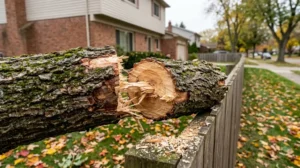
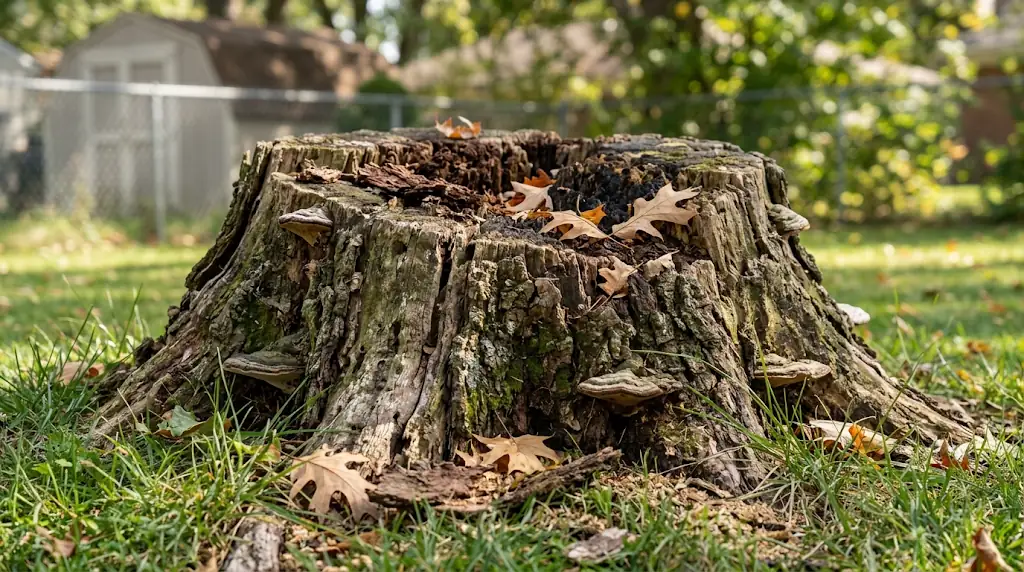
You can legally leave a tree stump on private residential property in Troy, MI, but you should almost always grind it out. While city ordinances do not force homeowners to remove private stumps unless they harbor declared invasive pests or block public rights-of-way, leaving a stump invites subterranean termites, carpenter ants, lawn tripping liabilities, and continuous root-sprouting issues.
Grinding the stump 6 to 12 inches below grade eliminates structural pest threats and restores usable lawn space without tearing up your yard.
Leaving a Stump vs. Stump Grinding vs. Complete Excavation
Homeowners typically weigh three approaches to handling a leftover tree base:
| Comparison Metric | Leaving the Stump | Mechanical Stump Grinding | Full Backhoe Excavation |
| Typical Cost in Troy | $0 upfront | $120 – $450 | $800 – $2,500+ |
| Lawn & Turf Impact | None initially; mowing obstacle permanently | Minimal; contained to a 4- to 6-foot radius | Severe; tears up massive trenches and sod |
| Pest Attraction Risk | Critical: Houses carpenter ants & termites | Very Low: Eliminates the central food source | Zero: Complete root ball removal |
| Decomposition Timeline | 10 to 20+ years (hardwoods) | Immediate (turn into mulch on-site) | Immediate site clear |
| Replanting Feasibility | Impossible within original perimeter | Can reseed turfgrass; plant shrubs nearby | Allows immediate replanting in exact hole |
| Risk of Tree Resprouting | High (boxelders, willows, maples) | None (severs vascular growth crown) | None |
1. The Pest Vector: Termites, Carpenter Ants, and Fungi
Leaving a fresh stump creates a massive deposit of dying organic wood in your yard. As the stump loses moisture and begins to rot, it becomes prime nesting territory for wood-destroying insects:
- Subterranean Termites: The subterranean termite is active throughout southern Michigan. Dead subterranean root systems provide direct moisture and cellulose pathways that lead termites toward nearby residential foundations.
- Carpenter Ants: Carpenter ants do not eat wood, but they excavate extensive galleries inside moist, decaying stumps. Once established in a yard stump 15 feet from your exterior siding, satellite colonies frequently migrate indoors.
- Honey Fungus (Armillaria): Decaying hardwood stumps often become hosts for Armillaria root rot. This fungal pathogen spreads underground through root contacts, infecting and killing nearby healthy ornamental shrubs, fruit trees, and mature hardwoods.
2. Southeast Michigan Soil Dynamics: Clay vs. Excavation
Troy and surrounding Oakland County communities like Rochester Hills and Clawson sit on dense, clay-rich glacial till.
Attempting full mechanical root excavation using a backhoe or mini-excavator causes extensive collateral damage:
- Massive Soil Displacement: A mature 36-inch Red Oak root plate can anchor a subterranean root ball weighing more than 4,000 pounds. Digging it out creates an expansive crater that requires multiple yards of clean fill dirt to level.
- Severe Turf Compaction: Heavy excavation equipment rolling across wet Michigan clay compresses soil pores, ruining lawn drainage and causing water pooling.
- The Grinding Advantage: A high-speed stump grinder processes only the visible stump and surface flare roots down 8 to 12 inches beneath the turf line. The deeper, anchor root network is left deep underground to decompose naturally without disturbing surface grade.
3. Mower Damage, Liability, and Tree Resprouting
Stumps remaining just a few inches above or below the turf level create continuous maintenance hazards:
- Equipment Destruction: Hitting a hidden stump or raised surface root with a commercial lawn mower blade easily bends the mower crankshaft, resulting in costly engine repairs.
- Premises Liability: An overgrown, turf-concealed stump constitutes a tripping hazard. Under Michigan premises liability principles, homeowners carry a duty to maintain reasonably safe grounds for invited guests, utility workers, and delivery drivers.
- Aggressive Root Suckering: Hardwood species such as Silver Maple, Boxelder, Green Ash, and Willow rarely die when simply cut flat. Left unground, the living root system pushes up dozens of vigorous vertical shoots (suckers) every week. These suckers pull nutrients from your lawn and require constant manual pruning.
Municipal Regulations and Right-of-Way Rules in Troy
While private backyard stumps remain unregulated, specific municipal conditions require attention:
- Street Trees & Right-of-Way Turf: If the tree was removed from the “tree lawn” (the turf corridor between the curb and the public pedestrian sidewalk), municipal jurisdiction applies. Under the City of Troy Code Chapter 28 (Tree Regulations), all work within public places and street rights-of-way must conform to city director oversight. Private owners cannot leave protruding, hazardous stump remnants along pedestrian corridors.
- Diseased Wood Abatement: Under Section 5 of Troy’s tree ordinance, private landowners carry an affirmative obligation to treat or remove any woody plant material so diseased or insect-ridden as to constitute a public danger. Leaving stumps infected with transmissible pathogens can lead to municipal correction notices.
What to Do with the Grindings: Lawn Restoration Protocol
Grinding a standard 24-inch stump yields three to five wheelbarrows of mixed wood chips and topsoil. Leaving a giant mound of fresh wood chips directly over the grinding site will deplete surface nitrogen and kill new sod:
- Rake and Clear Excess Mulch: Shovel out 70% of the fresh wood grindings. Use them as landscape mulch around established flower beds (kept at least 6 inches away from house foundations to prevent pests).
- Backfill with Quality Topsoil: Fill the grinding depression with a 50/50 mix of screened topsoil and organic compost, mounding it approximately 1 to 2 inches higher than surrounding turf to allow for natural settling.
- Reseed Turfgrass: Apply a tough, cool-season grass blend suited to Oakland County (such as Kentucky Bluegrass and Turf-Type Tall Fescue), rake lightly into the soil, and water daily until established.
Precision Stump Grinding in Troy
Leaving a stump in your yard saves a small upfront fee but introduces pest vectors, mowing hazards, and ongoing regrowth problems. At Troy Tree Removal, our specialized low-impact turf grinders access narrow 36-inch backyard gates, grind stumps 8 to 12 inches below grade, and leave properties across Troy, Rochester Hills, Birmingham, and Bloomfield Hills clean and ready for new turf.
To clear hazardous stumps from your lawn, request an upfront quote through our contact page today.