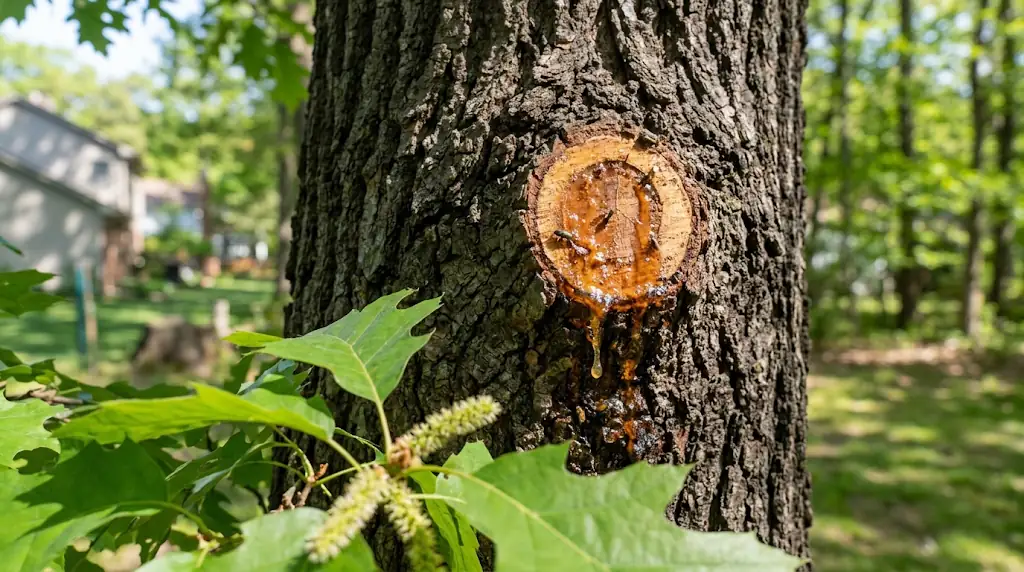
The high-risk window to avoid pruning, cutting, or wounding oak trees in Michigan is April 15 through July 15. While private residential trimming during this window is strictly restricted rather than criminalized on private land, cutting red oaks on state-managed forest land during this timeframe is legally prohibited by the Michigan Department of Natural Resources (DNR) to stop the spread of fatal Oak Wilt disease.
Trimming an oak tree during this three-month period creates fresh sap wounds that attract fungal-carrying beetles, causing total canopy death in healthy red oaks within three to six weeks.
Michigan Oak Pruning Risk Schedule
Forest pathologists and the Michigan State University Extension categorize oak maintenance into three distinct risk tiers based on insect vector activity and tree dormancy:
| Calendar Window | Risk Level | Operational Guidelines | Primary Biological Factor |
| April 15 – July 15 | Critical / Prohibited | Do Not Cut or Prune. Commercial harvesting on state land is halted. Emergency cuts must be sealed within 10 minutes. | Nitidulid sap beetles are actively flying and feeding on fresh sap. Spore mats are producing viable inoculum. |
| July 16 – October 31 | Moderate Caution | Proceed only if necessary. Pruning wounds should still receive preventive paint sealing in late summer. | Nitidulid beetle flight activity decreases significantly, but warm weather keeps opportunistic vectors present. |
| November 1 – March 14 | Safe / Optimal | Ideal Pruning & Removal Window. No artificial wound sealants needed. | Tree is completely dormant; vector beetles and fungal spores are inactive in freezing temperatures. |
Why Oak Wilt Is Lethal to Oakland County Canopies
Oak Wilt is caused by the invasive vascular fungus Bretziella fagacearum. The fungus attacks the tree’s water-conducting vessels (xylem), prompting the tree to plug its own vascular system with defensive tyloses. This self-defense mechanism prevents water from traveling upward from the root plate to the canopy, causing the tree to rapidly desiccate from the top down.
1. Overland Spread (The Insect Vector)
Between April 15 and July 15, previously infected oaks produce fungal pads (“spore mats”) underneath their bark that emit a sweet, fruity odor. This scent attracts tiny picnic beetles (nitidulid beetles). When a homeowner or landscape crew cuts, prunes, or lawn-mows into a healthy oak during this window, the tree immediately weeps fresh sap. Nitidulid beetles carry fungal spores directly from the spore mats into the fresh cuts within minutes.
2. Underground Root Graft Spread
Once an oak on your property contracts the disease, it spreads laterally beneath your lawn. Oaks within the same species group naturally fuse their root systems underground via functional root grafts. The fungus moves through connected roots at an average rate of 30 to 75 feet per year, killing entire neighborhood tree lines across adjacent properties in Troy, Rochester Hills, and Bloomfield Hills.
Red Oak vs. White Oak Susceptibility
Not all oak species respond to the infection in the same manner. Identification dictates risk exposure:
- Red Oak Group (Pointed Leaf Lobes): Northern Red Oak, Black Oak, Pin Oak, Scarlet Oak. 100% Mortality Rate. Red oaks have large, open xylem vessels. Once infected, leaves turn a dull bronze or pale green, shed heavily in mid-summer while still partially green, and the tree dies within three to five weeks. Red oaks cannot be cured.
- White Oak Group (Rounded Leaf Lobes): White Oak, Swamp White Oak, Bur Oak, Chinquapin Oak. Moderate Resistance. White oaks produce microscopic balloon-like structures that isolate the fungus inside isolated vascular bundles. Infected white oaks often lose single branches across multiple years rather than suffering rapid, total canopy collapse.
Emergency Storm Protocol: The 10-Minute Paint Rule
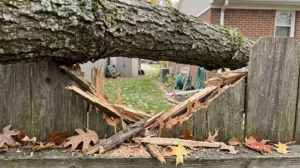
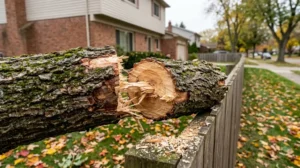
Severe summer thunderstorms across Southeast Michigan routinely snap branches off mature oaks between May and July. When structural tree breakage happens during the high-risk window, standard arboricultural guidelines change.
Under normal dormant conditions, arborists never paint tree wounds because sealant traps decay-causing organisms. However, during Michigan’s Oak Wilt window, the threat of fungal inoculation overrides natural wound compartmentalization:
- Immediate Sealing: Cover every exposed wood wound, cracked branch stub, or torn trunk surface with tree wound dressing or standard water-based exterior latex paint.
- The 10-Minute Window: Nitidulid beetles detect fresh sap volatilization within minutes. Wounds left exposed for more than an hour carry significantly elevated infection odds.
- Correct Cleanup Cuts: Once the immediate wound is sealed, an arborist can return during dormant winter months to make clean collar cuts without introducing pathogens.
Municipal Right-of-Way Rules and Tree Disposal
In addition to state DNR forest guidelines, local municipal codes govern how oak timber is handled:
- City Street Trees: Under the City of Troy Code Chapter 28, street trees situated between the curb and public sidewalk cannot be pruned or felled without a permit from the City Director. Unpermitted cuts along municipal corridors risk both disease spread and municipal infraction citations.
- Firewood Transportation Restrictions: Never transport diseased oak wood to other properties or northern Michigan cottages. The Michigan Department of Natural Resources warns that moving untreated firewood cut from oak-wilt-killed trees is the primary cause of long-distance disease spread. Diseased wood must be processed through debarking, chipped to 1-inch pieces, tarped in airtight plastic with edges buried under soil for a full year, or burned completely on-site before April 15.
Signs Your Troy Property Has an Active Oak Wilt Infection
Check your trees for these distinct diagnostic markers between June and September:
- Rapid Midsummer Leaf Drop: The lawn beneath the oak canopy becomes covered with leaves in July and August, while surrounding maples and oaks remain fully leafed.
- Marginal Leaf Scorching: Leaves display water-soaked browning starting at the outer leaf margins and moving inward toward the petiole, often retaining green tissue at the very base.
- Sweet Fermentation Odor: Cracks in the bark release an odor reminiscent of rotting fruit or stale beer.
- Vibratory Trenching Need: If confirmed, infected trees must be mechanically isolated using a vibratory plow or trencher to sever underground root connections down to a depth of 5 feet before the diseased tree is cut down; cutting the tree down without severing root connections pulls fungal spores directly into neighboring trees via vascular root suction.
Safe, Compliant Oak Tree Care in Troy
Protecting Southeast Michigan’s canopy requires strict adherence to biological timelines and precision rigging. At Troy Tree Removal, our crews schedule oak trimming exclusively during safe dormant periods, utilize sterile cutting equipment, and execute root barrier trenching to protect properties across Troy, Birmingham, Bloomfield Hills, and surrounding Oakland County neighborhoods.
To schedule a health assessment or reserve a winter dormant pruning slot for your oak trees, contact our team through our contact page today.